Easy Chicken Stir Fry That Comes Together in 30 Minutes
I want to be honest with you: this is not the kind of recipe that usually appears on Café Thinkers.
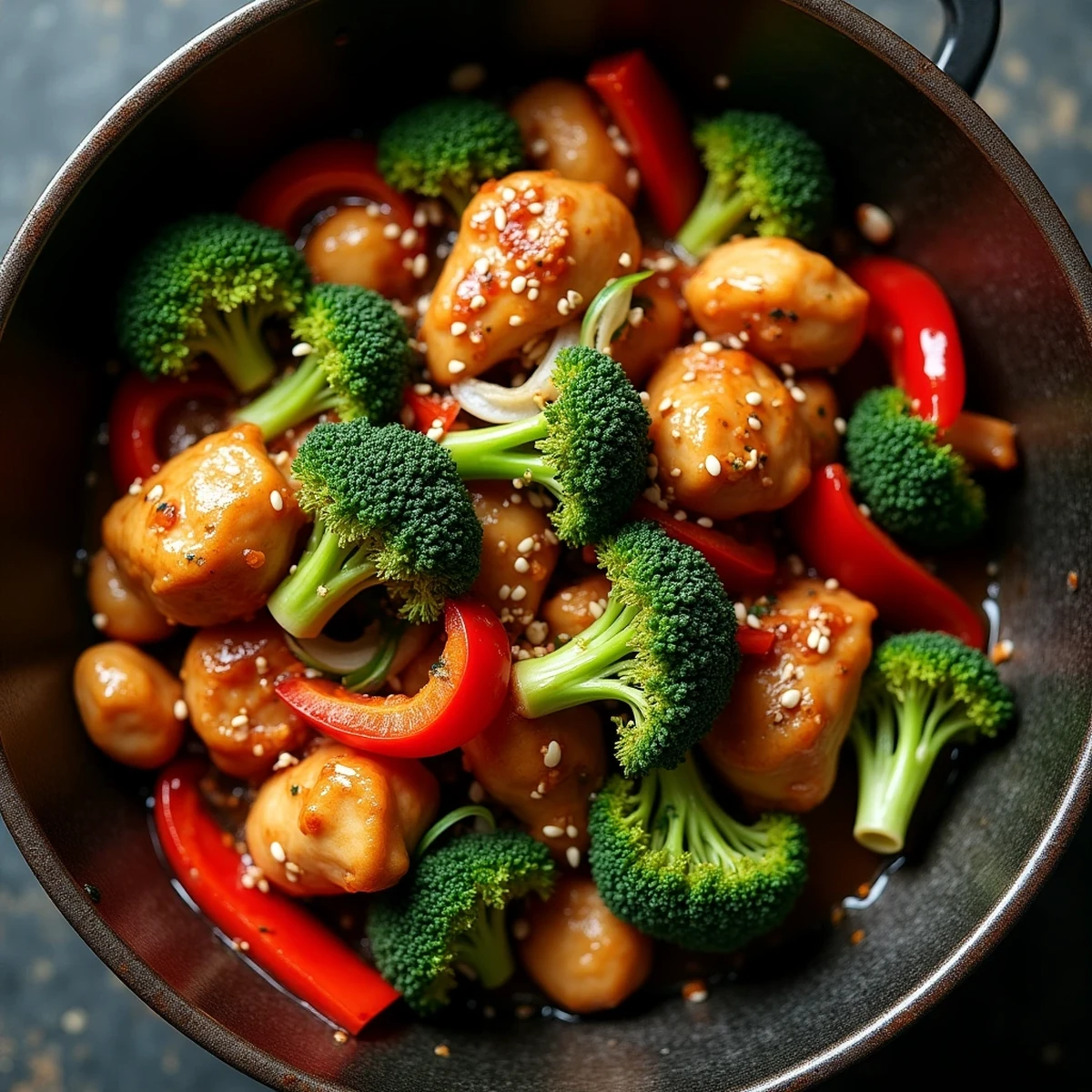
I want to be honest with you: this is not the kind of recipe that usually appears on Café Thinkers. It is not a slow breakfast. There is no coffee pairing. No one is lingering over this dish on a Saturday morning with a book and a flat white. This is a weeknight dinner — the kind you make when Zara has rehearsal until seven and Abram comes home hungry and the refrigerator contains exactly one chicken breast, half a head of broccoli, and a quantity of hope.
And yet. There is something worth writing about here, because a good stir fry is, in its own way, a considered thing — if you let it be. The technique comes from Chinese home cooking, refined over centuries into something that is genuinely sophisticated in its simplicity: high heat, fast movement, a few carefully chosen sauces, and the discipline to stop before you overcook anything. The wok hei — the breath of the wok, that slightly charred, smoky quality you get from cooking at very high heat — is not incidental. It is the point. Most home kitchens can’t fully replicate it, but you can get close. Close is quite good.
I learned to make stir fry properly not from my Italian father or my Ethiopian mother, but from a cookbook that lived on the bottom shelf of my college apartment, and later from a meal I ate at a tiny restaurant in the Sham Shui Po neighborhood of Hong Kong, where the cook worked a wok over a flame so high it seemed impractical and produced something I have been trying to reproduce ever since. This recipe is my weeknight approximation. It will not make you forget Hong Kong. It will, however, make you forget you were tired.
Pay attention to the sauce ratios and the heat. Everything else is forgiving.
Ingredients
- 500g boneless, skinless chicken breast or thigh — thigh is preferred for its flavor and forgiveness
- 2 tbsp soy sauce (for the marinade)
- 1 tbsp Shaoxing rice wine or dry sherry
- 1 tsp cornstarch
- 1 tsp sesame oil (for the marinade)
- 3 tbsp neutral oil — vegetable or peanut, not olive
- 3 garlic cloves, thinly sliced
- 1 thumb-sized piece of fresh ginger, peeled and cut into matchsticks
- 2 medium heads of broccoli, cut into small florets (approximately 300g)
- 1 red bell pepper, thinly sliced
- 3 spring onions, cut into 2cm pieces, white and green parts separated
- 3 tbsp soy sauce (for the sauce)
- 1 tbsp oyster sauce
- 1 tsp dark soy sauce
- 1 tsp rice vinegar
- 1 tsp sugar
- 2 tsp cornstarch dissolved in 3 tbsp cold water
- 1 tsp sesame oil (for finishing)
- Cooked jasmine rice, to serve
- Sesame seeds, for garnish — optional but worth it
Instructions
-
- Slice the chicken against the grain into thin strips, approximately 5mm thick. Thin, even slices cook quickly and evenly — this matters more than it seems. In a bowl, combine the chicken with 2 tbsp soy sauce, the Shaoxing wine, 1 tsp cornstarch, and 1 tsp sesame oil. Toss to coat and set aside for at least 10 minutes while you prepare everything else.
-
- Mix the sauce in a small bowl: 3 tbsp soy sauce, oyster sauce, dark soy sauce, rice vinegar, and sugar. Stir until the sugar dissolves. Separately, dissolve the remaining 2 tsp cornstarch in 3 tbsp cold water. Keep both bowls near the stove — once the wok is hot, there is no time to be searching for anything.
-
- Blanch the broccoli if you prefer it tender rather than crisp: drop the florets into boiling salted water for 90 seconds, then transfer immediately to cold water and drain. This step is optional, but it guarantees even cooking and a vivid green color. Pat dry thoroughly before using — water in a hot wok is a forceful disagreement.
-
- Heat your largest, heaviest pan — a wok if you have one, a wide cast-iron skillet if you do not — over the highest heat your stove can produce. Allow it to heat for a full two minutes. It should be very hot before any oil goes in. Add 2 tbsp of the neutral oil and let it shimmer and begin to smoke slightly.
-
- Add the chicken in a single layer, as much as the pan will allow without crowding. If your pan is modest in size, cook in two batches — crowding produces steam, not sear, and you want sear. Cook without moving for 60 seconds, then toss and cook for another 60 to 90 seconds until the chicken is just cooked through and has some color. Remove to a plate and set aside.
-
- Return the pan to high heat. Add the remaining 1 tbsp of oil. Add the white parts of the spring onion, the garlic, and the ginger. Stir constantly for 30 seconds — the garlic should turn fragrant and faintly golden. Do not let it burn; burned garlic will persist through the entire dish.
-
- Add the broccoli and red pepper. Toss vigorously for 2 minutes, keeping everything moving. The vegetables should retain their texture and color — bright, with just a hint of char at the edges if your heat is high enough.
-
- Return the chicken to the pan. Pour the sauce over everything and toss to coat. Cook for 30 seconds, then add the cornstarch mixture, stirring as you pour. The sauce will thicken almost immediately — it should coat the chicken and vegetables in a glossy, even layer. Add the green parts of the spring onion.
-
- Remove from heat. Finish with 1 tsp sesame oil, drizzled over the top. Taste and adjust — more soy if it needs salt, a small splash more rice vinegar if it needs brightness.
-
- Serve immediately over jasmine rice. Scatter sesame seeds if you like. This dish does not wait well — eat it now, while the heat is still there.
Nutrition
Tips
1. The marinade does real work — do not skip it. The cornstarch in the marinade creates a thin coating on the chicken that protects it from the heat, keeps it tender, and helps the sauce adhere later. Even ten minutes makes a difference. If you have time to marinate for thirty minutes, the result is noticeably better — the chicken stays juicy even at high heat.
2. Mise en place is not optional here. This is a recipe that cooks in twelve minutes, which means there is no time, once the wok is hot, to slice a pepper or measure a sauce. Everything — vegetables cut, sauces mixed, cornstarch dissolved — must be ready before you turn on the heat. This is the discipline that makes fast cooking feel calm rather than chaotic. My father approaches his ragù the same way, just on a different timescale.
3. Trust the heat. The instinct, especially with chicken, is to lower the heat when things start to sizzle aggressively. Resist it. High heat is not a sign that something is going wrong — it is the point. The char, the sear, the slight smokiness that makes a stir fry taste like a restaurant rather than a Tuesday: all of it comes from heat you didn’t turn down.